
Skip to content
Clear communicationFree inspections
Call now (612) 555-0159
Minneapolis, MN (612) 555-0159
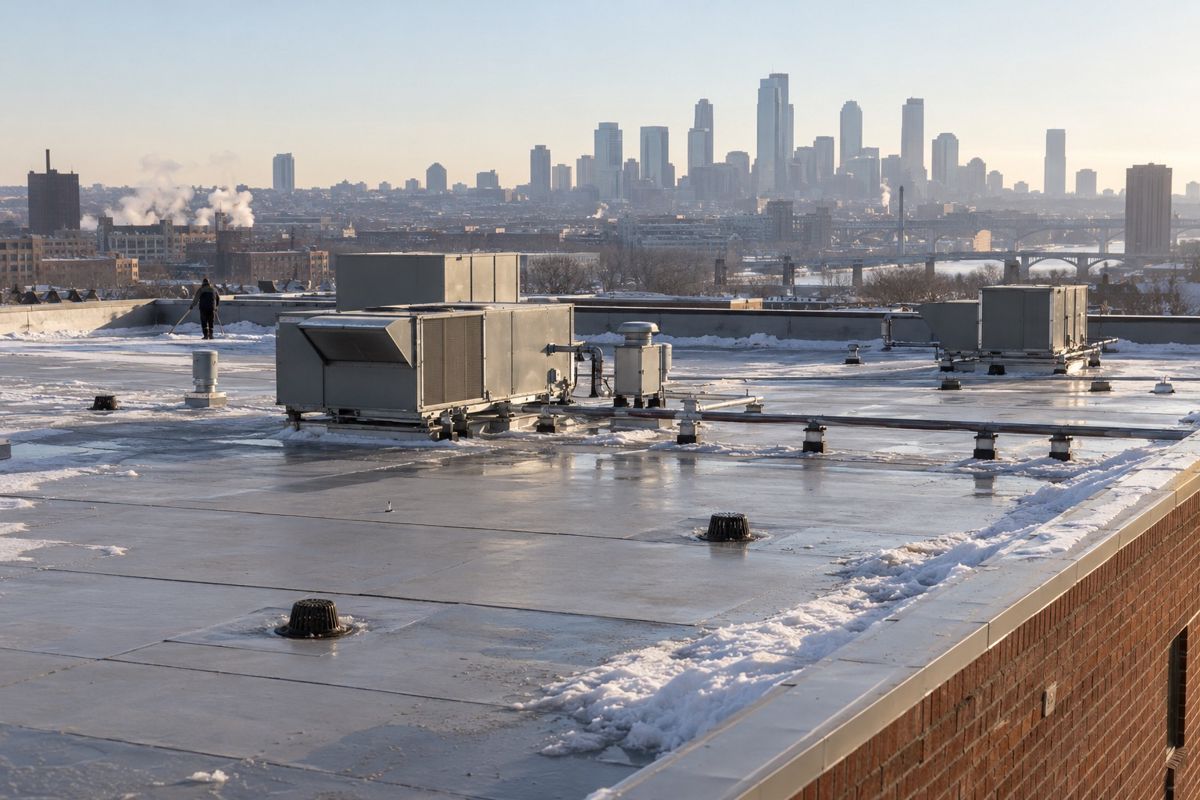
Flat membrane roof of a brick commercial building with rooftop units

Commercial roofing in Minneapolis, MN

Commercial roofing in Minneapolis for flat and low-slope roofs

Shops, offices, warehouses and apartment buildings have different roofs and different needs. The scope and price are quoted in writing.

  • Flat and low-slope roofs
  • Planning around tenants and operations
  • Written scope before work starts

Step 1 of 3

What do you need?

What types of commercial roofs are common in Minneapolis?

Most commercial buildings have flat or low-slope roofs. The membrane on top and the way it is attached are what keep water out, so it helps to know what you have. Common systems include:

  • EPDM, a rubber membrane, often black, that is common on older and mid-sized buildings.
  • TPO and PVC, single-ply membranes with heat-welded seams, often white or light grey.
  • Modified bitumen, asphalt-based sheets installed in layers.
  • Built-up roofing, layers of felt and asphalt, still found on older buildings.
  • Metal roofing, common on warehouses and some retail buildings.

Older brick buildings, industrial space and strip centers around the metro area often have a mix of these, and many have had patches added over the years. Knowing the system and its age is the first step to a sound decision. If you do not know, a roof inspection can tell you.

What problems do flat roofs have in Minnesota winters?

Flat roofs do not shed water the way a pitched roof does, so drainage matters all year. In a Minneapolis winter, a few problems come up again and again:

  • Ponding water that sits in low spots and freezes, then thaws and refreezes, which stresses seams.
  • Clogged or frozen drains that leave snowmelt with nowhere to go.
  • Snow load, especially where snow drifts against parapets and rooftop units. Heavy accumulations deserve attention, and a structural professional should be involved if you are worried about a building.
  • Cracked flashing at parapet walls, curbs and penetrations after repeated freeze and thaw cycles.
  • Worn seams and punctures from foot traffic, tools or equipment service.

Roof leaks in a commercial building can disrupt tenants and inventory, so small problems are better handled early. See roof repair for how leak tracing works.

Repair, restoration or replacement for a commercial roof?

A flat roof does not have to be replaced the first time it leaks. The right choice depends on the condition of the membrane and, above all, whether the insulation underneath is wet.

  • Repair suits isolated problems such as a failed seam, a damaged flashing or a puncture.
  • Restoration, such as a coating system, can extend the life of a roof that is sound but aging, as long as the insulation is dry.
  • Replacement fits roofs with widespread failure, wet insulation across large areas or repeated leaks.

Moisture surveys and core samples help show how much of the roof is still sound. Ask for a written report with photos, a clear recommendation and the reasons for it. If the plan includes a full tear-off, ask whether old layers will come off or a new system will go over the old one, since building codes and manufacturers have rules about that. Our roof replacement page covers the general process.

Commercial roofing is usually priced by the job rather than by a simple rate, and the scope can be large. The main factors are:

  • Roof area and shape. More area and more levels mean more labor and material.
  • The system chosen. TPO, EPDM, modified bitumen, coatings and metal all have different costs.
  • Insulation. Wet or damaged insulation has to be replaced, and new work may need to meet current energy requirements.
  • Penetrations and rooftop equipment. Every curb, vent and unit needs flashing, and some equipment may need to be lifted.
  • Access and logistics. Crane or lift needs, street access and working hours add cost.
  • Permits and warranty terms. Both are worth understanding before work begins.

Ask for the scope, the materials and the warranty terms in writing, and ask who stands behind each warranty, the installer or the manufacturer.

How long does it take and how do you plan around tenants?

A repair may be finished in a day. A full replacement of a small to mid-sized flat roof can take several days to a few weeks, depending on size, weather and how many sections are done at a time. Treat any timeline as an estimate, because rain, wind and cold all change the schedule.

Before the work starts, plan for:

  • Noise and dust, especially if tenants or customers are inside
  • Parking and access for trucks and lifts
  • Protection for the area under the work, such as inventory, equipment and entrances
  • Shutting off or protecting rooftop units, if needed
  • A clear contact person on both sides

Phasing the work section by section helps keep the building in use. Send your building type, roof size if you know it and the problem you see to start, using the form on the home page.

Request commercial roofing

Tell us what you need and we call you back.

No obligation.

Step 1 of 3

What do you need?

Questions about roofing in Minneapolis

How do I know if my flat roof needs replacing?

Signs include repeated leaks, widespread seam failure, blistering or cracking of the membrane, ponding water that never clears and wet insulation. A moisture survey and a written inspection report are the surest way to know. Do not decide from the surface alone, because the damage under a membrane can be worse than it looks.

Can a commercial roof be coated instead of replaced?

Sometimes. Coatings can extend the life of a roof that is still sound and has dry insulation. They do not fix wet insulation or widespread structural problems. Ask for a moisture check before choosing a coating, and ask for the coating warranty terms in writing.

Does commercial roofing need a permit in Minneapolis?

Commercial roof work usually involves a permit, and some projects must meet current energy or fire requirements. Rules differ by city and by project, so confirm with the local building department. Ask your roofer who handles the permit and whether the cost is in the quote.

How often should a commercial roof be inspected?

A common practice is a check at least once a year, and after major storms. Spring and fall are sensible times because winter damage shows up in spring and fall is the last chance to fix drains and flashing before freezing weather. Keep the reports on file, since they help with warranties and insurance.

What should a commercial roofing quote include?

It should list the scope, the system and materials, how existing layers are handled, what is included for drains, flashing and insulation, how wet insulation will be priced, the permit, the schedule, the cleanup and the warranty terms. Ask for any missing item to be added in writing before you sign.

Clear communication
Free inspections
Written estimates
Local crew

Ready when you are Call now or request a quote online. Call for a free inspection Get my free quote (612) 555-0159

How it works

1

Call or request a quote

Tell us what is happening with the roof.

2

Free inspection

A roofer checks the roof and gives a written price.

3

Work done right

Clean crew, nail sweep, warranty in writing.