
Skip to content
Clear communicationFree inspections
Call now (612) 555-0159
Minneapolis, MN (612) 555-0159
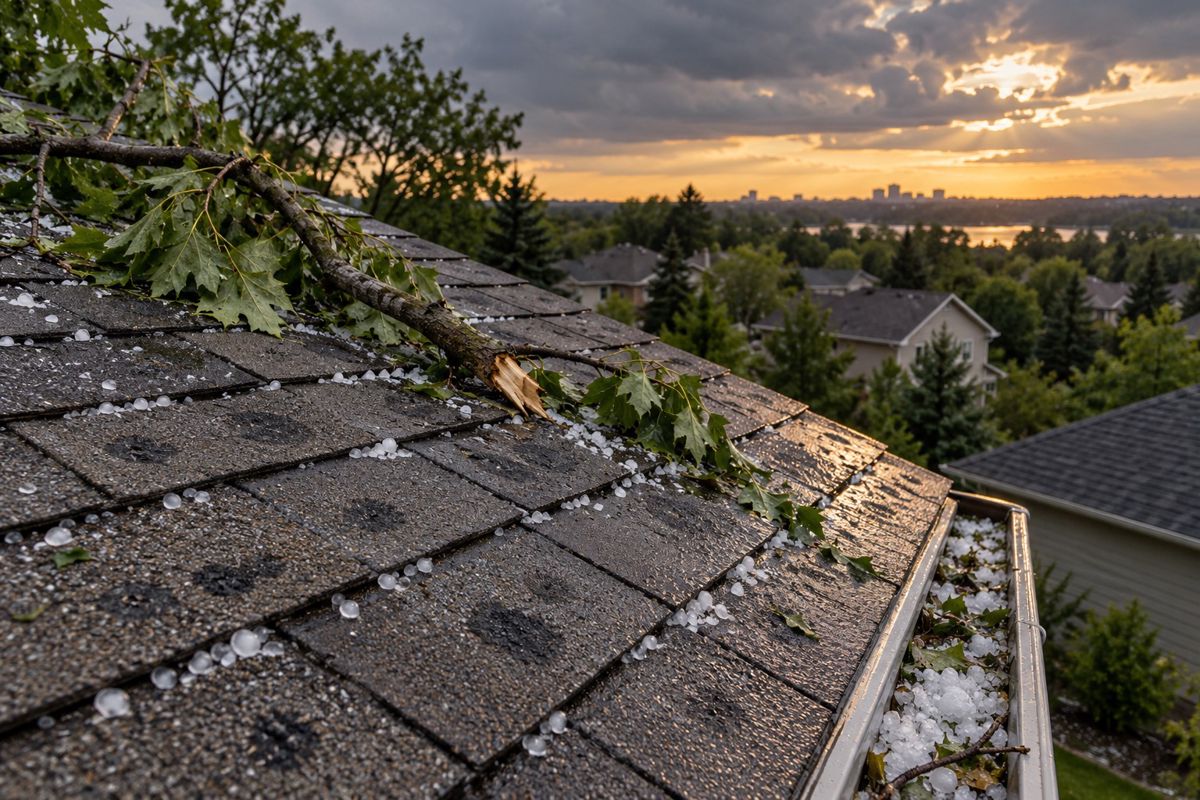
Hail-marked shingle roof with ice pellets and a fallen branch after a storm

Storm and hail damage, Minneapolis

Storm damage roof repair in Minneapolis after hail and wind

After a storm, the first job is to find out what happened to the roof and keep water out. Findings are explained and quoted in writing.

  • Hail and wind damage looked at closely
  • Photos and notes for your insurer
  • Temporary protection when a roof is open

Step 1 of 3

What do you need?

What does hail and storm damage look like on a roof?

Summer thunderstorms in the Twin Cities can bring hail, strong straight-line wind and falling branches. The damage is not always easy to see from the ground, and some of it only shows up after a closer look.

Common signs include:

  • Hail hits on shingles that look like dark, bruised spots where granules have been knocked off, sometimes with a soft feel underneath
  • Dents in metal such as vents, gutters, flashing and ridge caps
  • Lifted or creased shingles where wind has pulled at the tabs
  • Missing shingles or granules collecting at the bottom of downspouts
  • Broken branches or impact marks where something landed on the roof

Hail damage on the roof is often accompanied by dents on soft metal around the house, such as the air conditioner fins or the garage door. Those clues help show that a storm was strong enough to matter.

What should you do first after a storm?

Start with safety. Do not climb onto a wet or damaged roof, and stay away from sagging ceilings and downed power lines. Then work through this short list:

  1. Walk the property and take dated photos of what you can see from the ground, including gutters, siding, fences and the yard.
  2. Check ceilings and the attic for new stains or drips.
  3. Cover or catch active leaks and move belongings out of the way.
  4. Call your insurance company and ask how to start a claim.
  5. Have the roof looked at and the damage described in writing.
  6. Keep receipts for any emergency repair, such as a tarp.

Where a roof is open to the weather, temporary covering is a normal first step, and it is usually something your insurer expects you to do. Be careful with anyone who knocks on doors after a storm and pushes you to sign quickly. Take your time and compare.

How does insurance work with roof storm damage?

Your policy and your insurer decide what is covered, not the roofer. Still, it helps to understand the basics before the adjuster visits.

  • Sudden damage from hail, wind or a fallen tree is often covered. Wear, age and neglect are usually not.
  • Many policies have a deductible for wind and hail that is a percentage of the home's value rather than a flat dollar amount. Check yours.
  • Claims have time limits, so report the damage soon after the storm.
  • A roofer can inspect the roof, document the damage and give you a written scope of work to share with the adjuster.

Contractors should not offer to cover or rebate your deductible, and you should ask your insurer about the rules that apply in Minnesota. If you are not sure whether the damage is storm related or just age, a roof inspection is a sensible first step.

Storm repairs range from a few shingles to a whole roof, so the price depends on what the roof actually needs. The main factors are:

  • How much of the roof is affected. Damage on one slope is a different job from damage on all of them.
  • Roof age and material. Older shingles can be brittle, and a full replacement is sometimes the better choice when damage is widespread.
  • Deck and underlayment. Water that has gotten in may have soaked the wood or insulation.
  • Metal parts. Dented vents, flashing and gutters are replaced, not repaired.
  • Insurance scope. The insurer's estimate and the actual cost of the work can differ, and your roofer can explain any gap.

For a small, limited problem, see roof repair. For widespread damage, see roof replacement. In both cases, get the scope and the price in writing.

How long does repair take and when should you call?

A repair of a few shingles or a flashing can be done in a short visit. A full replacement after hail takes the same one to three working days as any other, and weather can change that. After a big storm, many homeowners call at once, so waits for a full job can grow. This is one reason temporary protection matters.

Call a roofer when:

  • You see missing shingles, dents on metal or granules in the gutters after a storm
  • A ceiling is stained or dripping
  • A branch or tree has hit the roof
  • Heavy snow or ice has pulled gutters or flashing loose

You do not need to wait for a leak to call. Hail damage can shorten a roof's life even when nothing drips yet. Start from the home page, send your address and describe what happened.

Request storm and hail damage

Tell us what you need and we call you back.

No obligation.

Step 1 of 3

What do you need?

Questions about roofing in Minneapolis

How can I tell if my roof has hail damage?

From the ground, look for dents on vents, gutters and flashing, and for granules in the downspouts. On the roof itself, damage looks like dark, bruised spots with missing granules. Much of it is hard to spot without climbing up, so have a roofer look rather than going on the roof yourself.

How long do I have to file a claim after a storm?

The deadline depends on your policy and on state rules, so ask your insurer as soon as you notice damage. Do not wait for the next season. Waiting makes it harder to link the damage to a specific storm and can put the claim at risk.

Should I get a roofer before or after the adjuster?

Either can work. Having a roofer document the damage first gives you your own record of it, and a roofer who is present at the adjuster's visit can point out things that might be missed. Whichever you choose, keep the roofer's findings and your own photos together.

Is a tarp enough after storm damage?

A tarp is a short-term fix to keep water out until a proper repair is done. It can slide or tear in wind, so it is not a plan for the whole season. Keep your receipt, take photos of the damage before covering it and schedule the lasting repair as soon as it is practical.

Can heavy snow and ice damage a roof too?

Yes. Heavy snow adds weight, and ice dams can lift shingles and push water under them. Gutters can pull loose under the weight of ice. Damage like this is sometimes covered and sometimes treated as wear, depending on your policy and the cause, so photograph it and ask your insurer.

Clear communication
Free inspections
Written estimates
Local crew

Ready when you are Call now or request a quote online. Call for a free inspection Get my free quote (612) 555-0159

How it works

  1. Step 1

    Call or request a quote

    Tell us what is happening with the roof.

  2. Step 2

    Free inspection

    A roofer checks the roof and gives a written price.

  3. Step 3

    Work done right

    Clean crew, nail sweep, warranty in writing.