
Skip to content
Clear communicationFree inspections
Call now (612) 555-0159
Minneapolis, MN (612) 555-0159
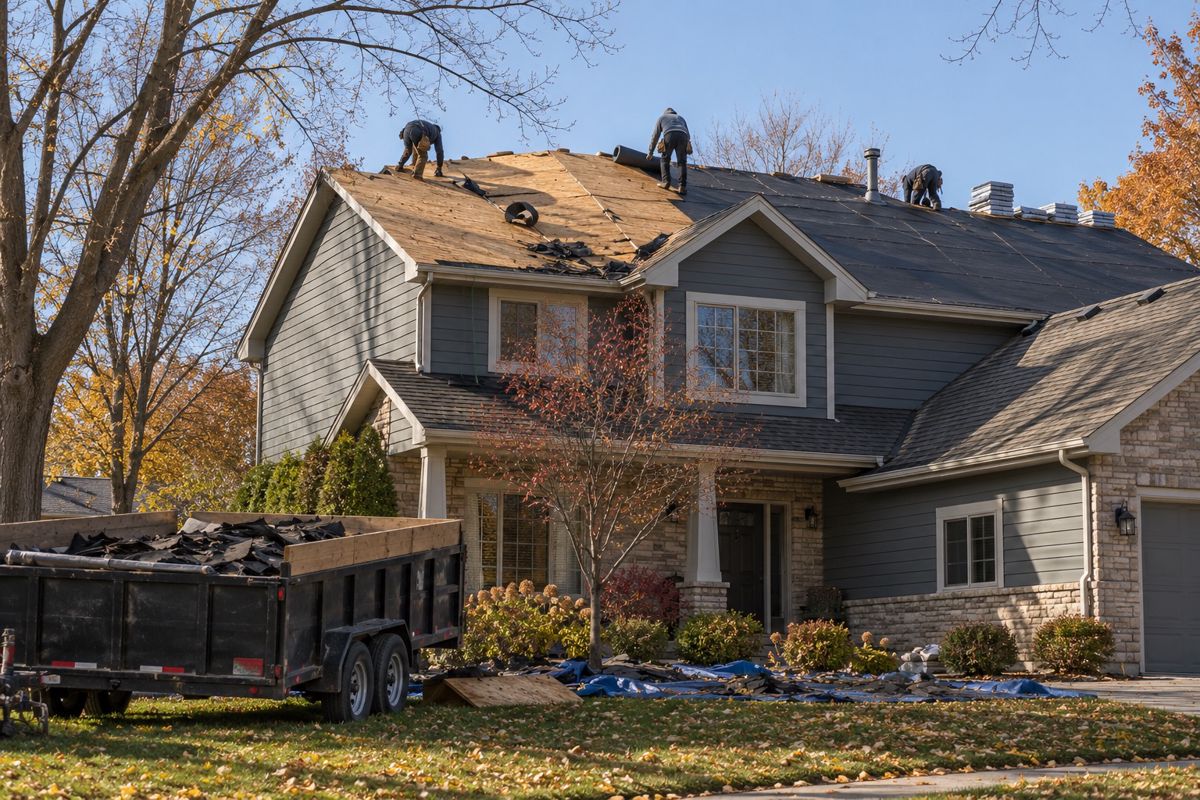
Roof tear-off underway with new underlayment being laid on a suburban house

Roof replacement in Minneapolis, MN

Roof replacement in Minneapolis, planned around winter

A new roof is a big decision. The options are explained in plain words and the quote is put in writing before any work starts.

  • Written quote before work starts
  • Layers and materials explained
  • Ventilation and ice protection checked

Step 1 of 3

What do you need?

When is it time for roof replacement in Minneapolis?

A roof does not fail all at once. It wears out in stages, and Minneapolis weather speeds the process. Shingles go through many freeze and thaw cycles every winter, and the summer sun bakes them between storms. Over time the granules wear off, the shingles curl or crack, and the sealant strips stop holding.

Signs that point toward replacement instead of repair:

  • Shingles curling, cracking or losing granules across large areas, not just one slope
  • Leaks in more than one spot, or leaks that return after repairs
  • Sagging or soft areas in the roof deck
  • Daylight visible in the attic, or dark damp patches on the underside of the deck
  • Hail or storm damage spread over most of the roof

If you are only seeing one problem, a roof repair may be enough. A roof inspection can help you decide before you commit to a full job.

What does a roof replacement involve?

A full replacement starts with removing the old roofing down to the deck. The crew then checks the deck boards for rot or water damage and replaces any that are soft. Next comes the layer that matters most in snow country: the waterproof underlayment and, along the eaves, an ice and water membrane that helps keep meltwater from backing up under the shingles.

After that the crew installs:

  • Drip edge along the eaves and rakes
  • New flashing at chimneys, walls, skylights and valleys
  • Pipe boots and roof vents
  • Shingles or another roofing material, fastened to the manufacturer's instructions
  • Ridge cap and ridge ventilation where the design calls for it

Reusing old flashing to save money is a common shortcut that can lead to leaks later. Ask any contractor what they plan to do with it, and get the answer in the written quote.

How do ice dams and snow load affect a new roof?

Ice dams form when heat escapes from the living space, warms the roof and melts the snow on it. The water runs down to the cold eaves and freezes, building a ridge of ice. More meltwater then backs up under the shingles. A new roof can help with this, but only if the attic is dealt with too.

When you plan a replacement, ask about:

  • Attic ventilation, including air intake at the soffits and exhaust near the ridge
  • Air sealing and insulation at the attic floor, which is often done by a different trade
  • Ice and water membrane at the eaves and in valleys

Snow load is the weight of snow sitting on the roof. Building codes account for it on new construction, but an older roof with sagging rafters or damaged decking carries it less well. If you see sagging, call a roofer or a structural professional soon.

Two roofs on the same street can cost very different amounts. The main factors are:

  • Size and pitch. More area means more material and labor. Steep roofs take longer and need extra safety gear.
  • Material. Asphalt shingles usually cost less than metal, cedar or slate. Heavier shingle lines cost more than basic ones.
  • Layers. Removing two layers takes longer than removing one.
  • Deck condition. Rotted boards must be replaced, and the amount is often not known until the old roof is off.
  • Roof shape. Valleys, dormers, chimneys and skylights all add flashing work.
  • Access. Tight lots, mature trees and attached garages can slow the job.

Ask for a written quote that lists the materials and says how extra deck repair will be priced. You can start from the Minneapolis roofing home page and send a few details about your house.

How long does it take and what happens on the day?

Many single-family roofs are done in one to three working days. That depends on the size, the number of layers, the roof shape and the weather, so treat it as a general guide and not a promise. Rain, wind and deep cold can push a job back.

On the first morning, expect noise and activity. The crew sets up ladders, covers plants and the ground around the house, and starts the tear-off. Old material goes into a trailer or dumpster. Move cars away from the house and take pictures off the walls on the top floor, because hammering shakes the building.

Pets and small children are better off somewhere else for the day. When the work is finished, the crew should clean up, check the yard for nails and walk the roof with you. If hail brought you here, see our storm and hail damage page as well.

Request roof replacement

Tell us what you need and we call you back.

No obligation.

Step 1 of 3

What do you need?

Questions about roofing in Minneapolis

How long does a roof last in Minneapolis?

Asphalt shingles often last somewhere around a couple of decades, and cold, snowy climates with large temperature swings can pull that toward the lower end. Ventilation, installation quality, shingle grade and tree cover all matter. Metal roofing often lasts longer. An inspection of your own roof tells you more than its age alone.

Can new shingles go over the old ones?

Some building codes allow a second layer in some cases, but it hides deck problems, adds weight and can shorten the life of the new roof. Many contractors recommend a full tear-off. Ask what your city and the shingle manufacturer allow, and get the plan written into the quote.

Do I need a permit for a roof replacement in Minneapolis?

Many cities in the Twin Cities area require a building permit for re-roofing. Rules and fees change, so confirm with your city's building department. Ask the roofer who will pull the permit and whether the cost is in the quote. Skipping a permit can cause trouble when you sell the house or file an insurance claim.

What time of year should I replace my roof?

Spring through early fall is the usual window, because shingle sealant strips bond when it is warm. Winter work is sometimes possible, but cold can slow bonding and snow slows progress. Popular dates fill up after storms, so plan ahead if your roof is aging and you can choose the timing.

What should be in a written roof replacement quote?

Look for the scope of work, the brand and line of every material, how many layers will be removed, what is included for flashing, vents and ice protection, how rotted decking will be priced, who handles the permit, how cleanup is done and what the payment terms are. If something is missing, ask for it to be added before you sign.

How do I check a roofer before hiring?

Minnesota requires most residential roofers to hold a state license, and you can look one up on the Department of Labor and Industry website. Confirm the rules there, since they can change. Ask for proof of liability insurance, read the quote line by line and be cautious of anyone who pushes you to sign on the spot.

Clear communication
Free inspections
Written estimates
Local crew

Ready when you are Call now or request a quote online. Call for a free inspection Get my free quote (612) 555-0159

How it works

  1. Call or request a quote

    Tell us what is happening with the roof.

  2. Free inspection

    A roofer checks the roof and gives a written price.

  3. Work done right

    Clean crew, nail sweep, warranty in writing.